For millennia, believers have unquestioningly called God “He.” But if the Divine is formless and beyond gender, why does society stubbornly masculinise the sacred? OSWALD PEREIRA exposes an uncomfortable truth
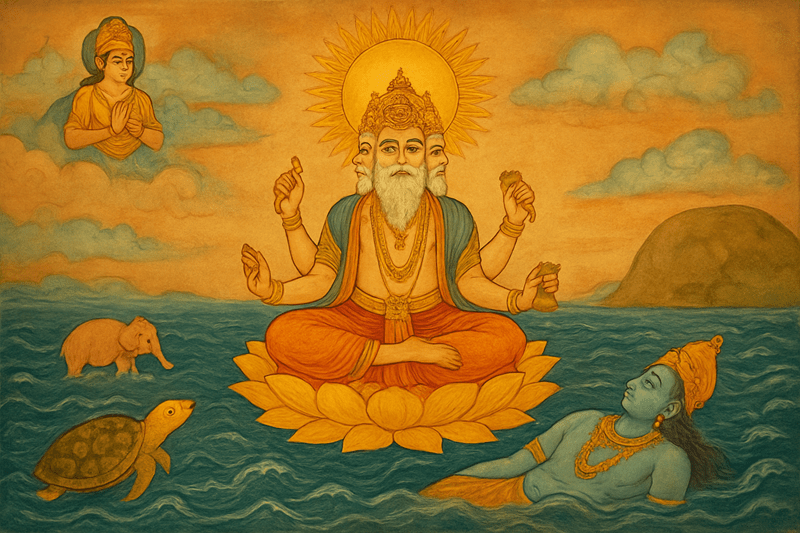
For millennia, humanity has invoked God with a confident pronoun: He. Not It, not They, not even the occasional She. Just a firm, unwavering, culturally rubber-stamped He.
But the real question is: why? If God, by every spiritual definition, is formless, boundless, beyond attributes, beyond even the duality of male and female—why does the divine keep ending up with a beard?
The answer is not theological. It is sociological. And it is uncomfortable.

For most of recorded history, the narrative of God has been written by men—priests, kings, monks, theologians, and scholars who shaped scriptures, rituals, and traditions. A male-dominated society naturally bequeathed a male-dominated God. The divine was dressed in the cultural clothing of patriarchy. When power belonged to men, divinity conveniently resembled them.
What we inherited, therefore, was not a gendered God, but a gendered interpretation of God.
Even the avatars, prophets, and saviours across religious traditions overwhelmingly appear as male. Was divinity truly incapable of choosing a female form? Or was society incapable of accepting one? The truth lies somewhere in the fog between revelation and reception.
A patriarchal society simply saw the masculine as the valid container for spiritual authority. It is no surprise that the messengers of God were overwhelmingly cast as men—even when the core mystical traditions declared God to be without form, without preference, without gender.
But then, a paradox emerges—one worth pausing over.
The very monks and mystics who spoke most loudly of a formless, genderless Absolute…themselves gravitated toward the imagery of the Divine Mother. Paramahansa Yogananda—whose writings have shaped millions—openly declared that he related to God best as the Mother. “When I think of God, I think of Divine Mother,” he wrote. His disciples continue to see him, not as a stern patriarchal prophet, but as an embodiment of maternal compassion.
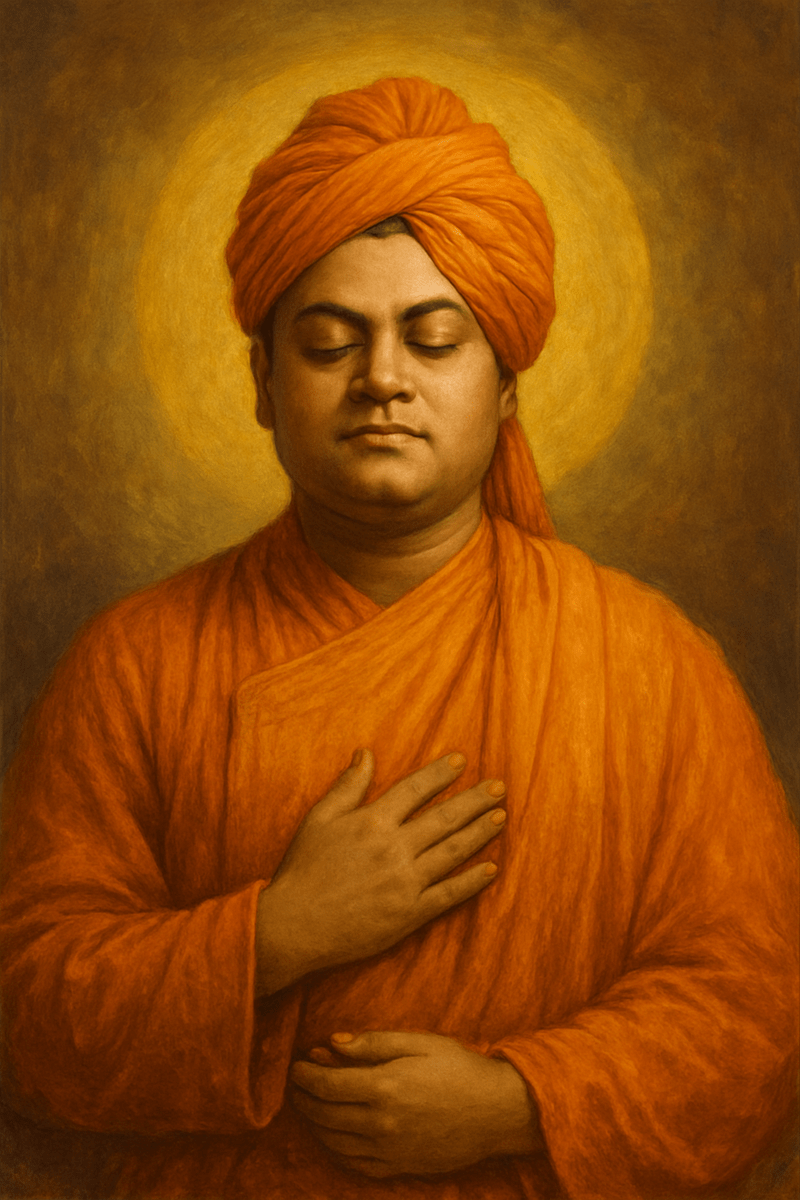
Swami Vivekananda, fiery and formidable as he was, softened before the Divine Mother in a way he never did with the paternal image of God. His guru, Sri Ramakrishna, lived intoxicated with the presence of Kali, not God the Father.
So, what does this reveal?
It tells us that at the experiential level, the mystic heart does not recognise the gendered boundaries imposed by society. When yogis enter the inner sanctum of consciousness, they do not meet a “Him.” They meet a Presence—fluid, cosmic, nurturing, boundless. Something vast and beyond definition. Something that dissolves the entire debate.
The Divine Mother becomes not a deity in the feminine sense, but an experience of unconditional love, protection, forgiveness—qualities patriarchy historically denied men, and therefore denied God as well.
Yet, even with such powerful mystical testimony, mainstream religion clings to the old pronouns. God remains a “He,” not because the divine insists on it, but because culture does. Because tradition resists revision. Because patriarchy is slow to relinquish its hold on the sacred.
Does this expose a male-chauvinistic history? Absolutely. When half of humanity is sidelined even in the imagination of God, the bias is not subtle—it is systemic. When spiritual leadership is overwhelmingly male, the message is unmistakable: the sacred space has long been guarded by a single gender.
But to question this is not blasphemy. It is necessary. Because any religion that restricts the divine to one gender restricts humanity itself.
It is time we acknowledged a simple truth:
God does not have a gender. Humanity does. And it projects that gender ruthlessly onto the divine.
The mystics—Yogananda, Vivekananda, Ramakrishna—point us toward a radical reawakening. To see God not as He or She, but as the infinite consciousness that expresses itself through all forms.
Perhaps we are finally ready for a God who is not male, not female, but magnificently beyond both.
And when we reach that level of understanding, we may discover that the Divine Mother and the Divine Father were never opposites—they were the same incomprehensible infinity speaking in different languages.
 OSWALD PEREIRA