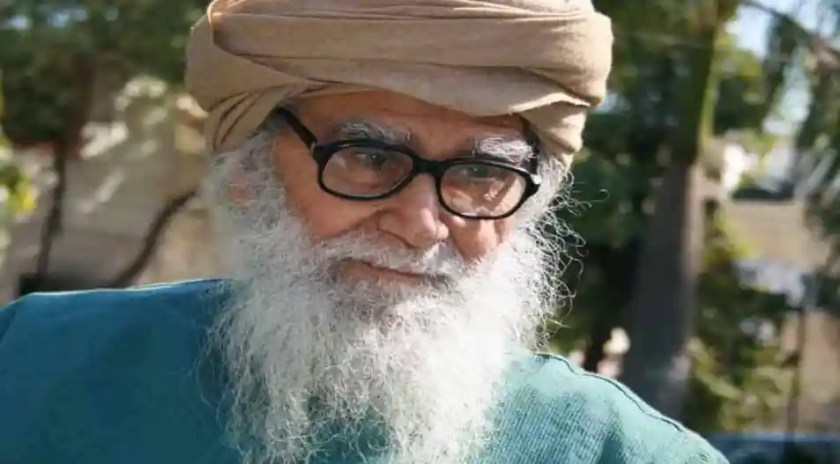
Maulana Wahiduddin Khan, a gentle voice of Islamic moderation, championed universalism of all faiths and the transformative power of dialogue, says OSWALD PEREIRA. His Gandhian spirit and deep spirituality shaped a lifelong mission to promote peace, harmony, and mutual understanding
Maulana Wahiduddin Khan, one of modern India’s most respected Muslim sages and a quiet torchbearer of peace, devoted his life to articulating the message of universalism at the heart of all religions.
A scholar, a moderate cleric, and a Gandhian by conviction, he tirelessly advocated dialogue over discord, persuasion over polemics, and compassion over confrontation. His worldview was shaped not only by the Qur’anic call to recognise the diversity of humankind as a divine blessing, but also by his deep engagement with India’s pluralistic ethos.
Maulana Sahab believed that every religion, when stripped of cultural and historical accretions, points toward the same moral and spiritual truths—compassion, humility, gratitude, and self-transformation.
For him, religions were “varied expressions of a single underlying Reality,” each illuminating different aspects of the divine design. He argued that the problem was not religion itself, but the human tendency to weaponise faith for identity politics.

True spirituality, he insisted, was universalist by nature; it dissolved the boundaries between “us” and “them” and emphasised the shared moral destiny of all people.
This universalist outlook made interfaith dialogue not merely important but essential in his philosophy. Dialogue, he maintained, was the highest form of worship because it honoured the God-given diversity of human perspectives.
He emphasised that the purpose of dialogue was not conversion or competition, but mutual enrichment. Across his writings and public addresses, he reminded audiences that listening with empathy was the first step toward peace. His presence at interfaith seminars organised by the Dalai Lama—where he stood alongside scholars, monks, priests, rabbis, and thinkers—was a testament to his conviction that spiritual traditions grow richer when they converse rather than collide.
Maulana Sahba’s personal life reflected the same idealism he preached. In a memorable interaction with author and journalist Oswald Pereira, the Maulana recounted the sheer ecstasy he had felt on the day India attained independence. He described the moment as feeling like he “was on Cloud Nine,” as though he “had wings and was flying.”

For him, the birth of a free India symbolised not only political liberation but also the spiritual possibility of building a society grounded in harmony, justice, and mutual respect. Pereira, who saw a saint in the respected cleric, included six of Maulana Sahba’s essays in his self-help anthology How to Create Miracles in Our Daily Life. The essays reflected the very interfaith spirit the Maulana championed—friendship across identities, anchored in shared moral purpose.
In an age marked by polarisation and doctrinal rigidity, Maulana Wahiduddin Khan’s voice remains both urgently relevant and deeply reassuring. His vision of universalism does not erase differences; rather, it sanctifies them as part of the divine tapestry.
His call for dialogue offers a roadmap to peace rooted in humility and shared humanity. As the world grapples with widening fractures along religious and cultural lines, the Maulana’s legacy stands as a reminder that the path to harmony begins with an open heart, a listening mind, and an unwavering faith in the unity of humankind.
Maulana Wahiduddin Khan, who left his physical body on April 21, 2021, four years short of a century, was an Islamic spiritual scholar, who had adopted peace as the mission of his life. Author of more than 200 books, and known for his Gandhian views, he considered non-violence as the only method to achieve success.
 OSWALD PEREIRA