
Paramahansa Yogananda hailed America as a beacon of spirituality, yet its trail of wars, interventions, and suffering exposes a disturbing chasm between its sacred ideals and global conduct, observes OSWALD PEREIRA
On the eve of his departure to the USA, Paramahansa Yogananda’s guru Swami Sri Yukteswar Giri advised his disciple to forget he was born a Hindu. But he also said, “Don’t be an American.”
However, after residing for more than 30 years in America, and becoming a US citizen, Yogananda fell in love with the country. Profuse in his praise for America, Yogananda said that the US had acquired a lot of good karma.
Yogananda envisioned a divine, spiritually destined America, but stark realities such as the Vietnam war and later US interventions in Afghanistan and Iraq, compel us to examine the paradox of American spirituality. It forces us to confront a question that has haunted modern history: Can a nation be both a vessel of spiritual aspiration and an agent of profound violence?

The Historical Contradiction
History shatters Yogananda’s luminous vision of the United States with a brutal contradiction. The nation he admired also unleashed immense destruction abroad. Nowhere is this more stark than in the Vietnam War—a moral indictment written in fire.
For years, America rained napalm bombs on Vietnam, scorching land and lives alike, while landmines—silent, lingering killers—maimed countless civilians, including children.
When the war ended, America withdrew, its conscience bruised and its prestige diminished. Vietnam, however, was left to bear the true cost: a ravaged landscape, innumerable dead, and generations condemned to live on without limbs, livelihoods, or dignity. In the face of such devastation, the image of America as a benevolent force is not just strained—it is fundamentally called into question.
Yogananda’s observation about Americans “craving for the Highest Spiritual realization,” and his claim that “of all western nations America is the most spiritual,” seem so unbelievable.
Subsequent US interventions—in Afghanistan, Iraq, and elsewhere—have reinforced this disagreement with Yogananda’s assessment of American spirituality.
While often justified in the language of security or democracy, these actions have led to long-term instability, civilian casualties, and humanitarian crises. The gap between America’s professed moral and spiritual ideals and its actions appears, at times, unbridgeable.

Even in contemporary geopolitics, including tensions surrounding the Iran–Israel conflict, the United States is often seen as a partisan actor rather than a neutral arbiter of peace.
The moral authority and spirituality that Yogananda attributed to America seems, in these contexts, eroded.
At the All Day Christmas Meditation, at the Self-Realization Fellowship International Headquarters, Los Angeles, California, on December 24, 1939, Yogananda reiterated his love for America and the fact that she were a spiritual nation. He said, “Some people think of America as a materialistic land, but I have found many wonderful souls here.”
He added joyfully, “I am glad to see so many here today, to chant and meditate with me. It is you, and souls like you, who are the real saviours of this country. By your devotion to God you bring blessings on your whole nation.”
The America Yogananda Saw

When Yogananda arrived in the United States in 1920, he encountered a society that, despite its material dynamism, was spiritually curious and open. His praise—“the best country to live in is America”—must be read in the context of the freedoms he witnessed: freedom of thought, religion, and self-expression. For a monk trained in the disciplined traditions of Indian spirituality, this openness was fertile ground.
Yogananda perceived something subtle yet powerful: a spiritual hunger beneath America’s outward materialism. As noted by his disciple Swami Kriyananda, he saw “an undercurrent of divine yearning” among ordinary Americans. This insight is crucial. Yogananda was not glorifying the machinery of the state; he was responding to the inner life of the people.
In his vision, America was not merely a geopolitical entity but a spiritual experiment—a place where East and West could meet. His idea of a “United States of the World” reflects a utopian aspiration, one in which nations transcend narrow identities and unite in spiritual consciousness. This is not nationalism; it is universalism.
The People vs. The State
How, then, do we reconcile these two Americas?
One possible answer lies in distinguishing between the American people and the American state. Yogananda’s experiences were largely with individuals—students, seekers, ordinary citizens drawn to meditation and self-realization. His America was composed of these individuals, not of policymakers or military strategists.
Democratic nations are complex systems where the will of the people is expressed—often imperfectly—through political institutions. The actions of a government do not always reflect the moral or spiritual inclinations of its citizens.

Consider the widespread protests within the United States against the Vietnam War. Millions of Americans opposed the conflict, demonstrating that the nation contained within itself a powerful moral conscience. Similarly, debates over interventions in Iraq and Afghanistan revealed deep divisions within American society.
Reducing America’s identity to just its foreign policy would be an oversimplification. It would ignore the vibrant traditions of dissent, self-critique, and reform that are also part of the American ethos.
Leadership and Moral Direction
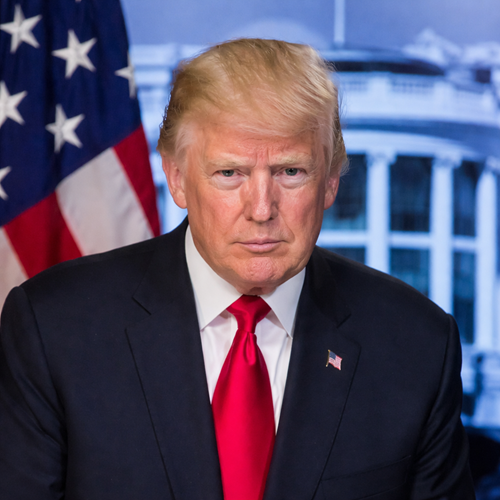
At the same time, leadership matters. Political figures shape the direction of national policy, often with global consequences. The role of leaders such as Donald Trump has been particularly polarising. Critics argue that his rhetoric and policies have exacerbated divisions, both domestically and internationally, and have sometimes undermined the moral image of the United States.
However, it would be simplistic to attribute America’s contradictions solely to any one leader. The issues are structural, rooted in the dynamics of power, security, and economic interests that transcend individual administrations. Presidents come and go; the deeper patterns often persist.
The Spiritual Ideal vs. Political Reality
What Yogananda represents, ultimately, is an ideal—a vision of what America could be at its best. His belief that America “does not institute a single war just for selfishness” may appear, in hindsight, overly optimistic. Yet it reflects a charitable interpretation of American intentions, one that emphasises potential rather than failure.

This raises an important philosophical point: spiritual teachers often see not only what is, but what could be. Yogananda’s America was aspirational. It was a projection of the nation’s highest possibilities—its commitment to freedom, its openness to new ideas, its capacity for generosity.
The tragedy lies in the divergence between this ideal and the realities of power politics. Nations, like individuals, are capable of both nobility and error. The United States is no exception.
A Deeper Paradox
America seems to be a nation of paradoxes. The same forces that enable freedom and innovation—economic power, technological advancement, global influence—also create the capacity for domination and violence.
America embodies this duality in an especially stark form. It is a nation founded on ideals of liberty and equality, yet historically, America is marked by slavery, inequality, and interventionism. It is a beacon of opportunity for many, and a source of suffering for others.
Yogananda’s vision does not negate this duality; it challenges it. By affirming the spiritual potential of America, he implicitly calls for a transformation—a movement from power to compassion, from domination to service.
Reclaiming the Vision
The question, then, is not whether Yogananda was right or wrong, but whether his vision can still serve as a guiding light. His faith in the spiritual destiny of America may seem, at times, misplaced. Yet it also offers a standard against which the nation can measure itself.
If America is to live up to the image that Yogananda saw, it must confront its contradictions honestly. It must align its actions with its ideals, its power with responsibility, its freedom with justice.
This is not a task for politicians alone. It is a collective responsibility, involving citizens, thinkers, and spiritual leaders alike. The “wonderful souls” that Yogananda encountered still exist. The question is whether their influence can shape the direction of the nation.
In the end, the story of America is not fixed. It is an ongoing narrative, shaped by choices—moral, political, and spiritual. Yogananda saw in America a possibility: a nation where material progress and spiritual realization could coexist. Whether that possibility is realized remains an open question.
And perhaps that is where the true power of his vision lies—not in its accuracy, but in its challenge.
Yoganananda said Americans were ready to learn meditation and God-communion through the practice of the ancient science of yoga.
Yogananda often spoke of America’s high spiritual destiny, says his direct disciple Swami Kriyananda in his book, The New Path. “Yogananda talked about an undercurrent of divine yearning, not in the intellectuals, but in the hearts of the common people,” observed Kriyananda.
If there is no divine yearning among intellectuals, one can only imagine how much less it would be in politicians.
But the big question is: are the common people capable of taking America to a spiritual high, while intellectuals couldn’t care less and power-hungry politicians drag the country down to ethical degeneration?
 OSWALD PEREIRA